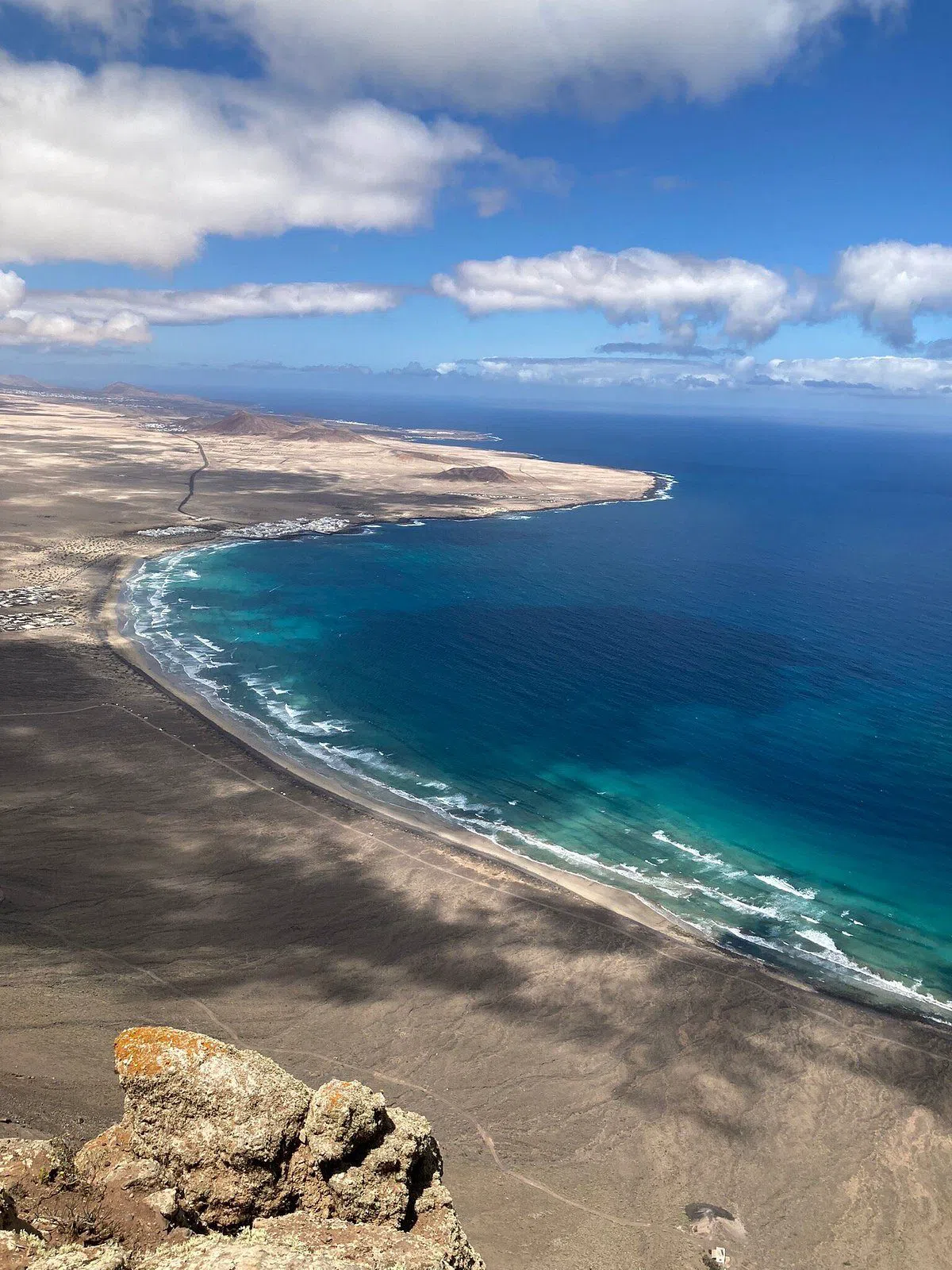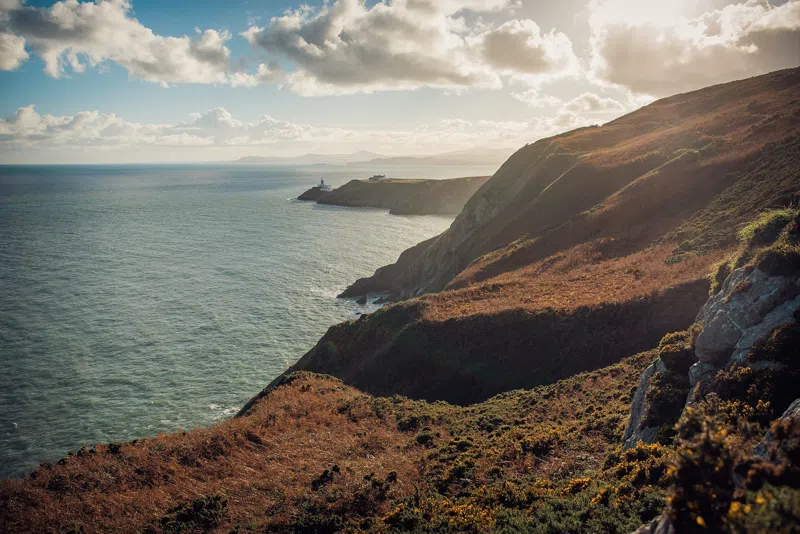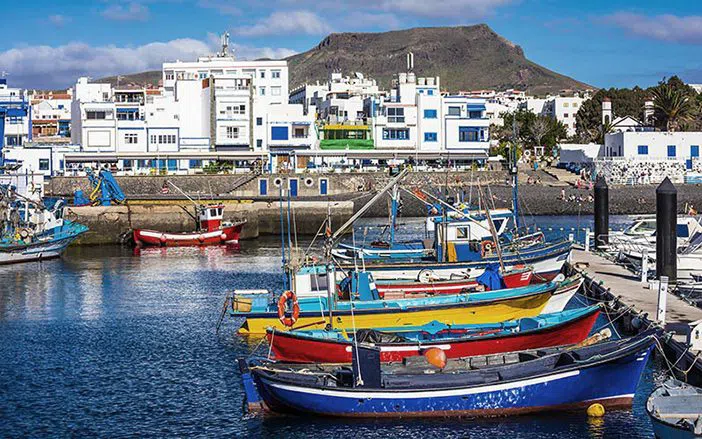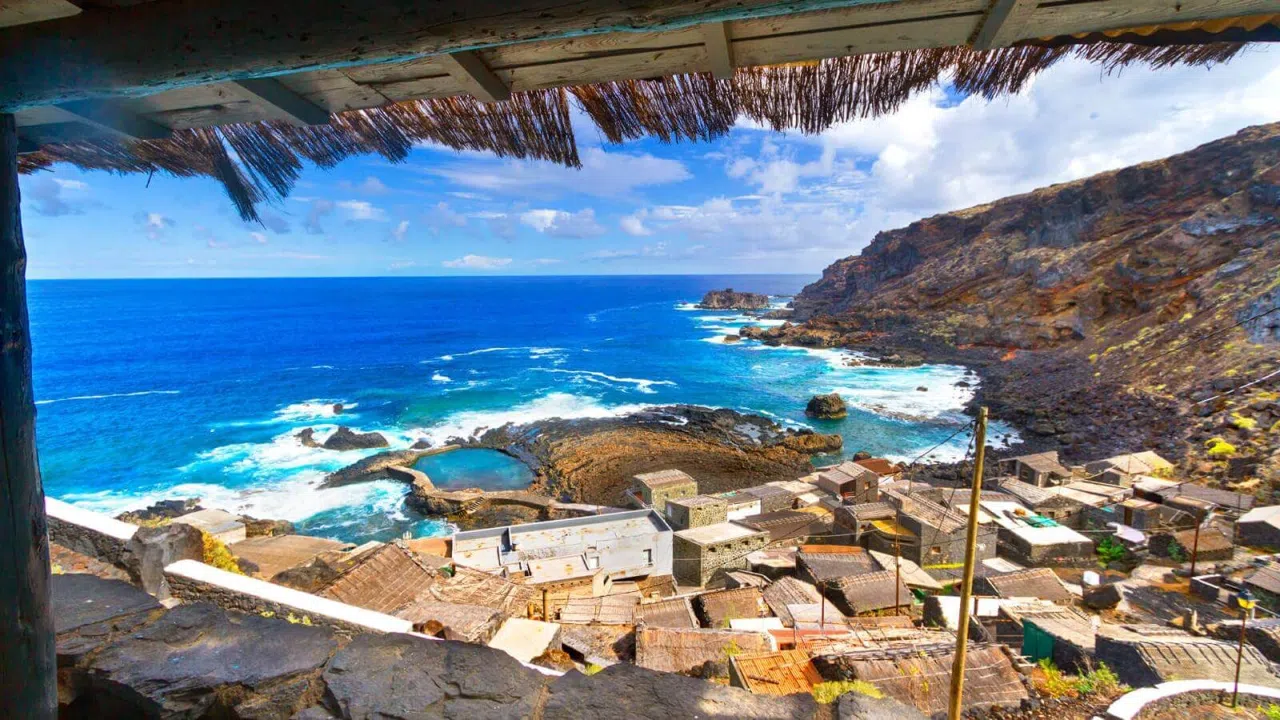
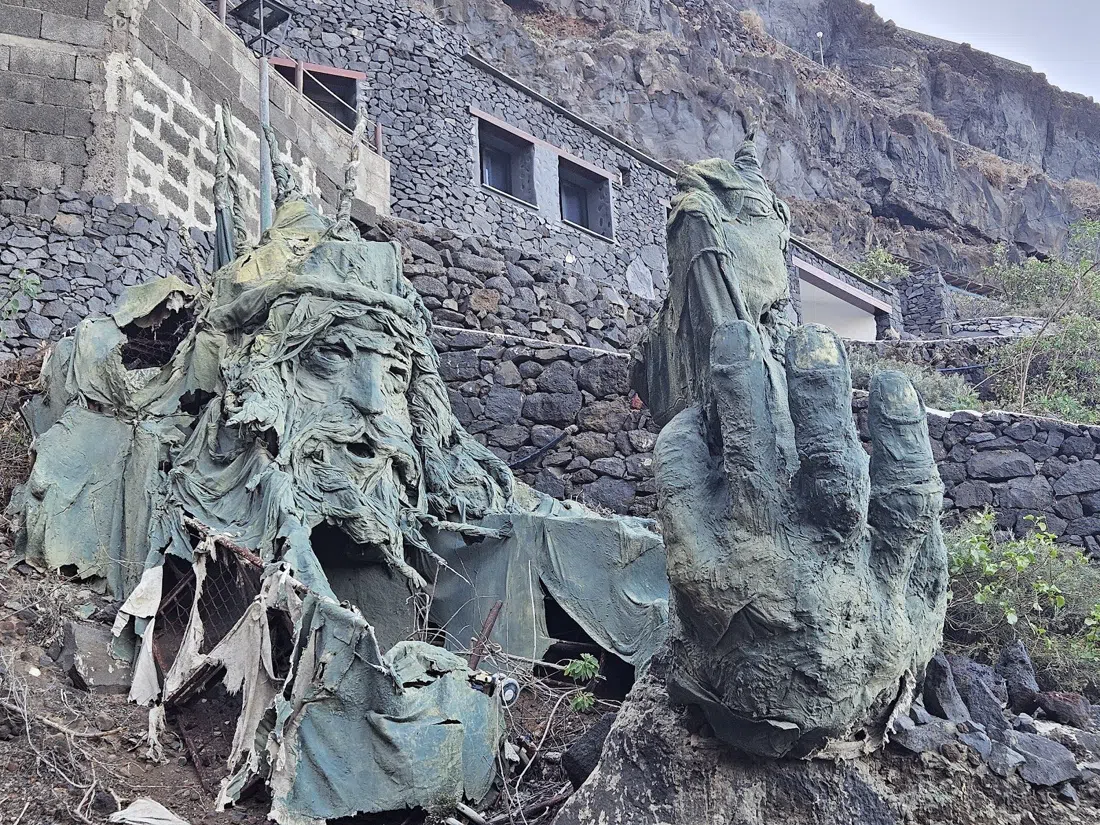
Pozo de las Calcosas sits at the foot of a 200-metre cliff on El Hierro's north coast, and no road reaches it. You park on the clifftop and walk down a stepped path. At the bottom of the stairs, a four-metre cement sea god with a trident faces the Atlantic.
The hamlet at the foot of the cliff
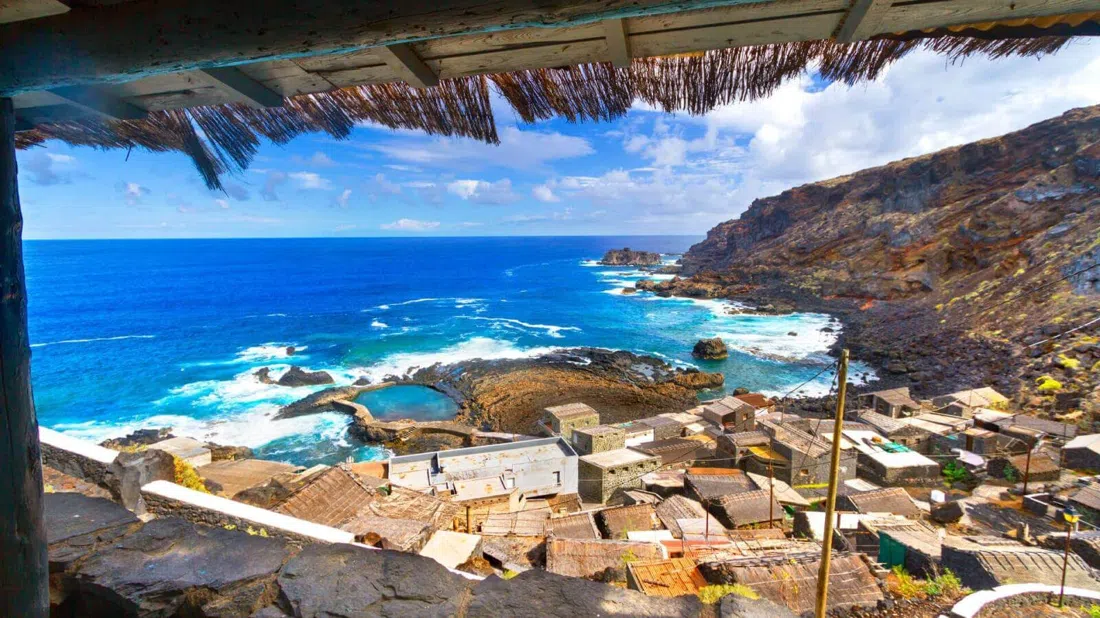
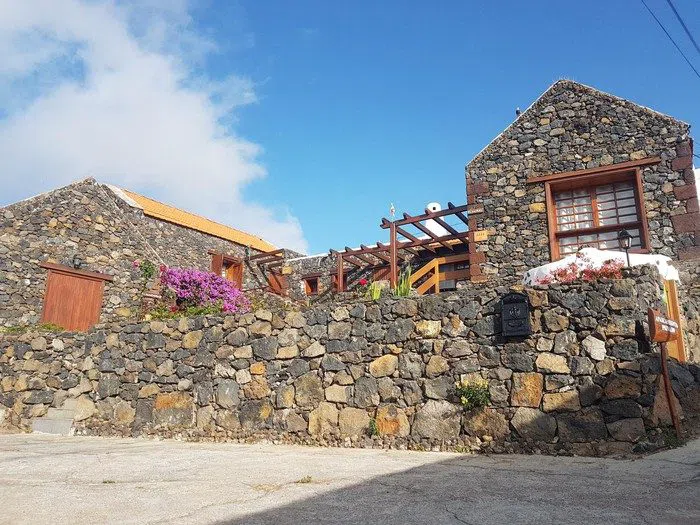
Two dozen cottages stand in dry black lava under shaggy golden rye-straw roofs, the colmo thatch of the casas pajeras. The settlement began in the 17th century as a well and herb plot, and fishing families from El Mocanal later rebuilt it as summer houses. It has the best surviving set of Herreño thatched architecture anywhere, and it is the island's postcard image.
The alleys between the houses are whitewashed and one person wide, and the Atlantic breaks on black rock at the end of every lane. Nothing is gated or ticketed, and entry costs €0. People live in these houses through the summer. Keep your party small and your voices down in the lanes.
Access is on foot. The stepped path from the clifftop car park is steep and no vehicle gets down it.
Neptuno de Rubén Armiche stands at the bottom of that staircase in grey cement, bearded, trident in hand, looking out to sea. The Canarian artist Rubén Armiche built him in 2007 from cement over sacking and household scrap the residents donated, with fridge and washing-machine parts embedded in his head. He is the most photographed object in Pozo. The standard photo stop is the foot of the stairs, outdoors and free.
Walking down from El Mocanal
The Circular El Mocanal – Pozo de las Calcosas trail runs 4 to 5 km round trip from El Mocanal village, 1.5 to 2 hours, waymarked and free to walk unguided. It drops on an old cobbled and dirt camino through terraced vine plots and dry-stone walls, then onto a zig-zag staircase pinned to the black cliff face, the thatched roofs appearing below you as you go. The climb back out is the hard part. Carry water and don't start it in the midday sun.
The descent begins beside the Ermita de la Virgen de la Peña, a single-cell whitewashed chapel with a plain bell gable and one wooden door on the upper lip of the cliff. You can see the outside at any hour. The inside opens for mass and for the hamlet's fiesta in early August, when El Mocanal families come down en masse. Give it two minutes even if the door is shut.
Swimming in the lava pools
The Charcos del Pozo de las Calcosas are cut into a solidified lava tongue at the end of the lanes, one large and one small, with concrete rims, metal ladders and turquoise water inside. White Atlantic spray bursts over the outer lip. Both are swimmable and shallow enough for children in calm weather. Cold showers stand on site and the pools have no toilets.
No lifeguard watches the water and the outer pool takes swell head-on, so check the sea state before you commit to the descent. Go at low tide. On a north-swell day, skip it. The concrete sunbathing platforms hold 30 people, and in high summer they fill.
Calmer water at Charco Manso and Tamaduste
Charco Manso lies 6 km north of Pozo by way of Echedo and the narrow HI-151. The pool is emerald and sheltered, ringed by low black lava cliffs pierced with natural arches and caves, and blowholes spout nearby. It is the best snorkelling on this coast. Currents build at high tide and in swell.
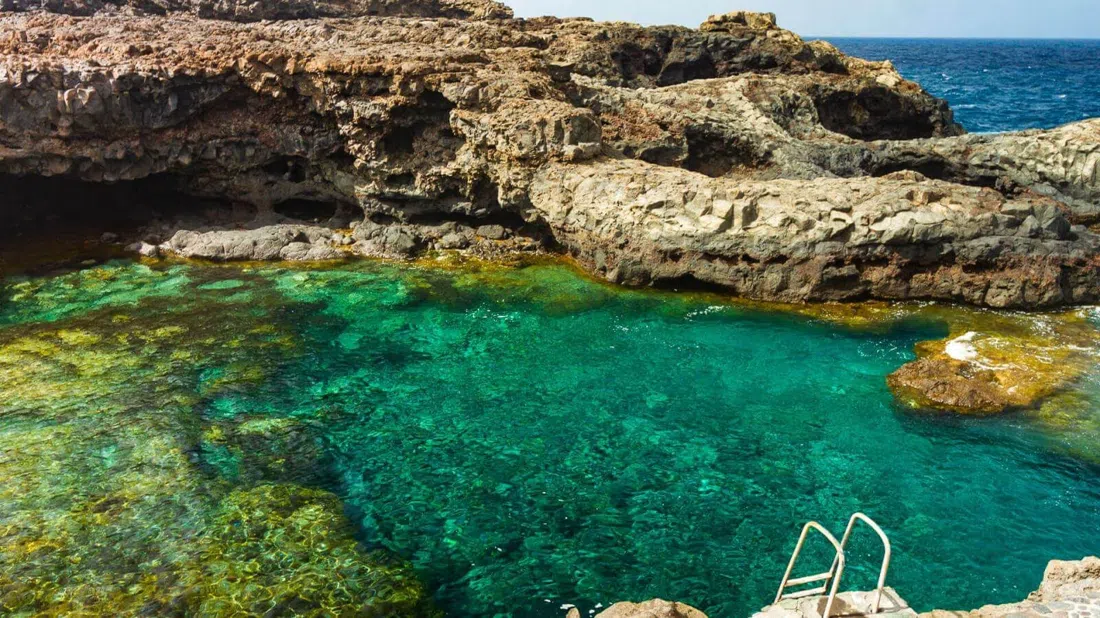
Getting in is easier than at Pozo, and the water is calmer once you are in: a large free car park, built stairs, a steel staircase to the water and concrete sun platforms. Swimming costs nothing. The kiosk is seasonal, tiny and takes cash only.
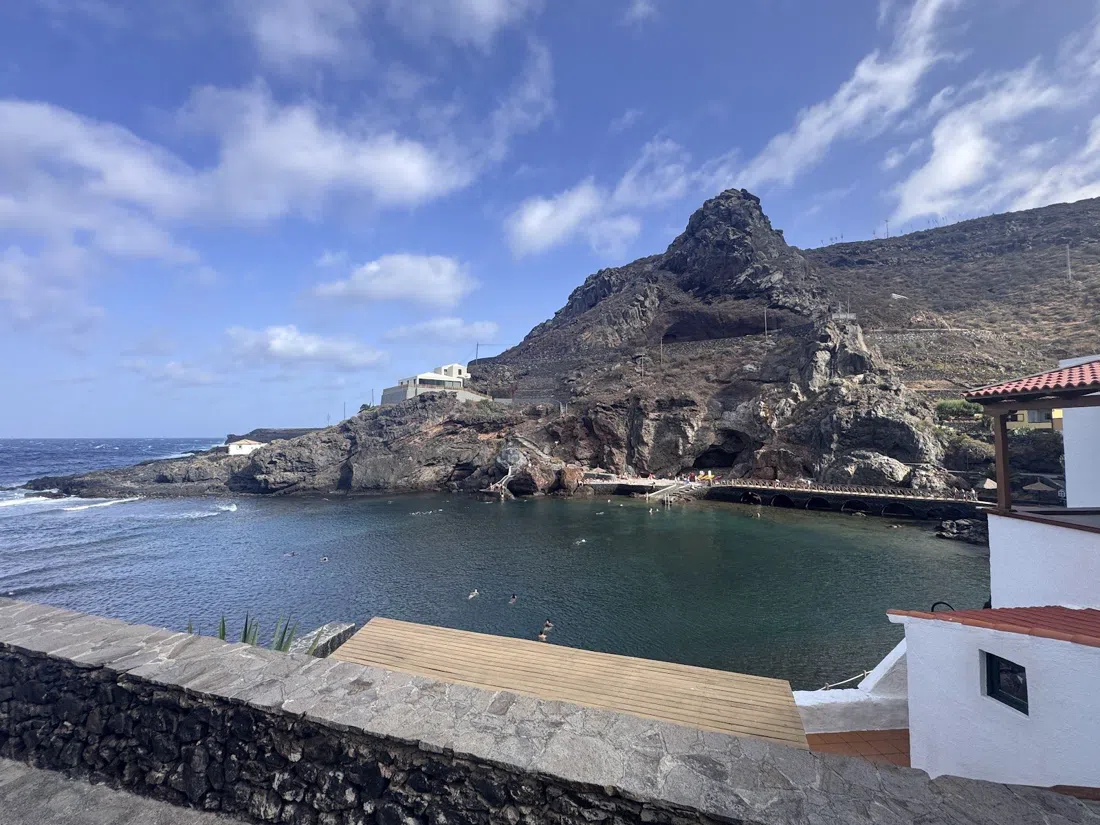
Tamaduste is 7 km from Pozo and the place to go when the north coast is too rough. A long narrow seawater lagoon sits trapped inside an old lava flow, flat calm and glass clear, with white and pastel houses stepping down to the edge and concrete bathing ledges along it. This is the calmest safe water near Pozo, shallow enough for young children. A handful of cafés back the lagoon, village parking fills fast, and the Virgen del Carmen boat procession lands here every 16 July.
Echedo and its vine terraces
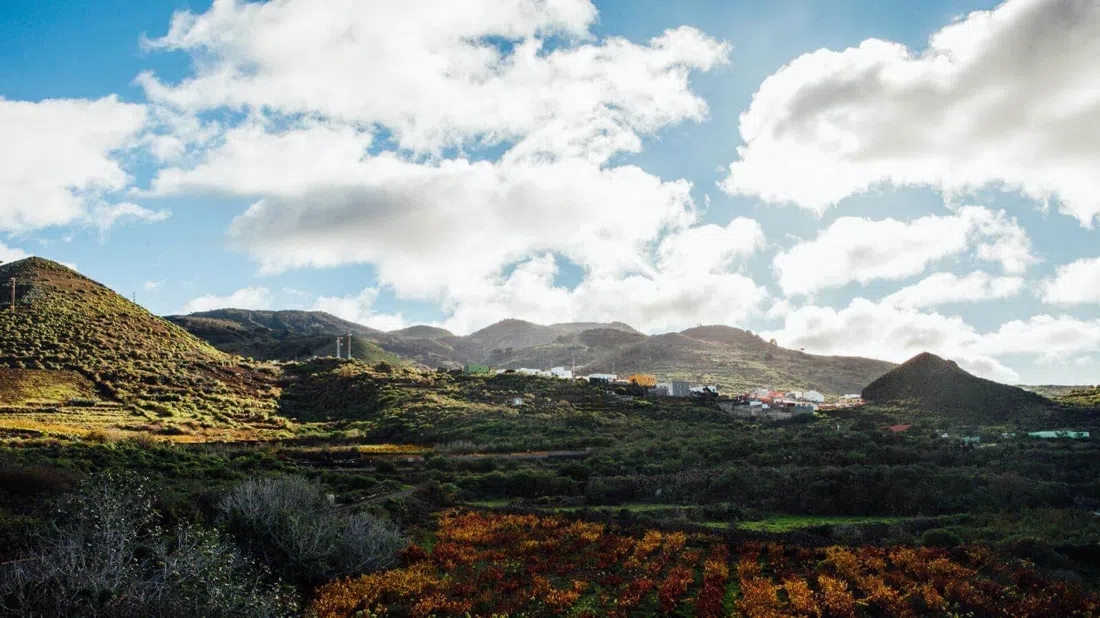
Echedo is the nearest village to Pozo, 3 km uphill, and one of the four DO El Hierro wine zones. Dark lava-stone houses climb a hillside above the Atlantic, and the vines grow straight out of black volcanic ash behind tightly stacked dry-stone walls. Wandering it costs nothing. Come for the terraces, the local wine and the blackberries; a bottle costs € to €€. The bodegas are tiny and take visits by prior arrangement only, so don't turn up expecting to taste. From Echedo the walking route carries on to Charco Manso.
Eating around Pozo
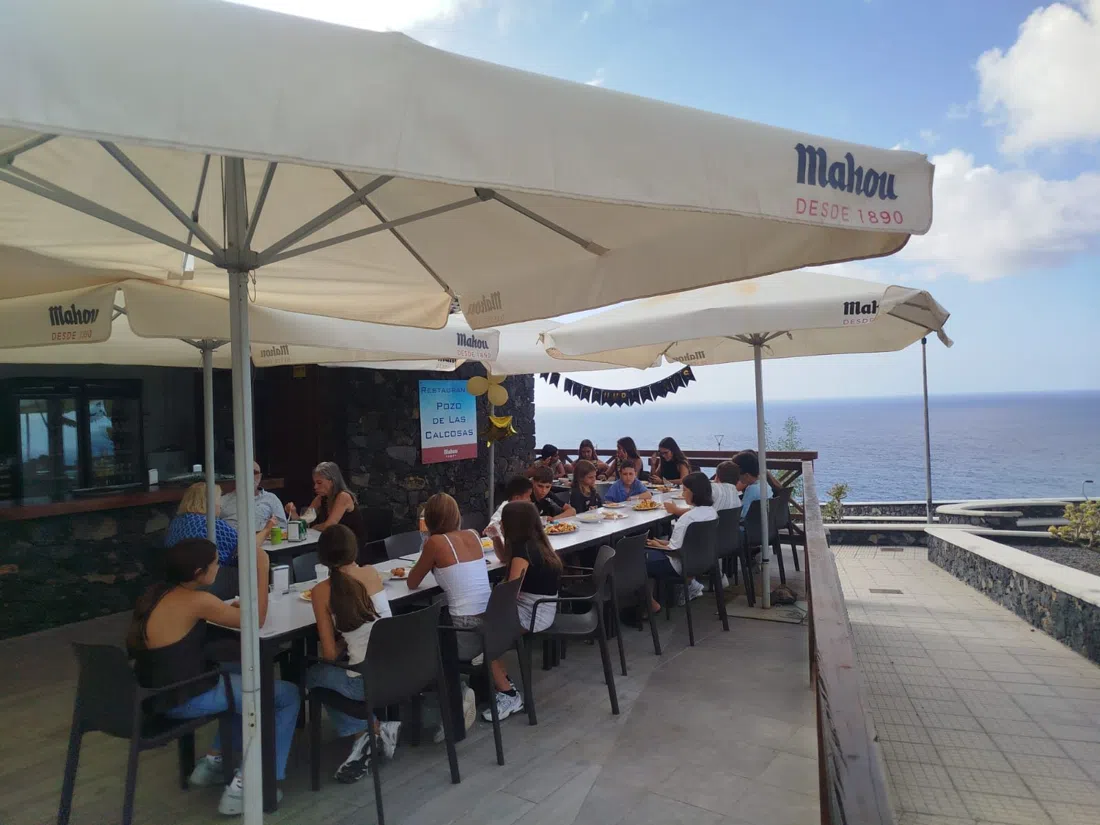
Restaurante Pozo de las Calcosas opened in 2026 at the top of the descent and is the only food at Pozo. Terrace tables sit on the bare clifftop at the mirador car park with the sheer black cliff and the thatched hamlet directly below, the best terrace view on the north coast. The kitchen sends out fresh local fish, shellfish and clams in green mojo. €30 to €40 a head. Access is step free and the toilet is adapted. Phone +34 636 369 188 to reserve, and phone again before you drive up off-season, when hours shift. Nothing is open down in the hamlet.
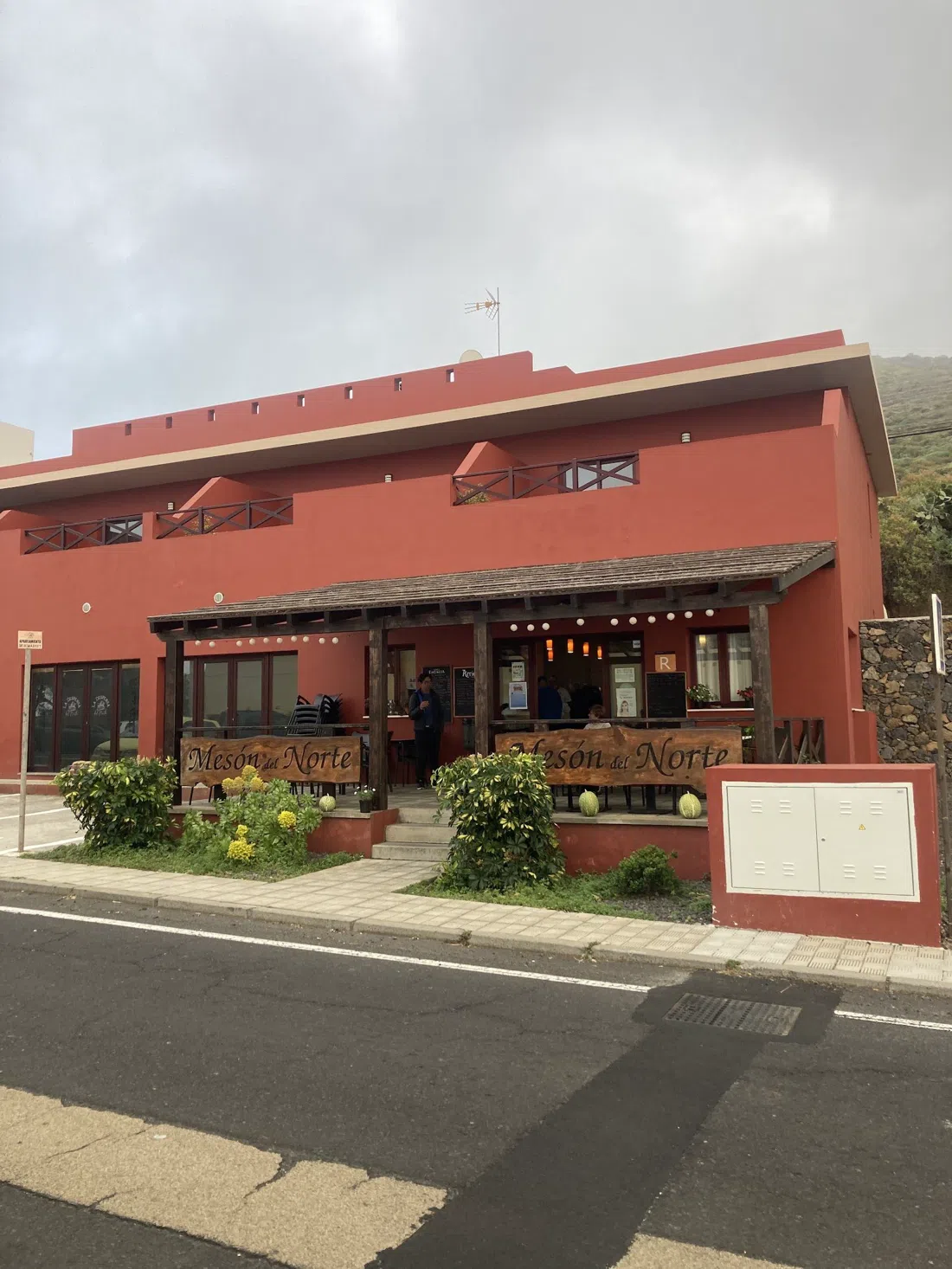
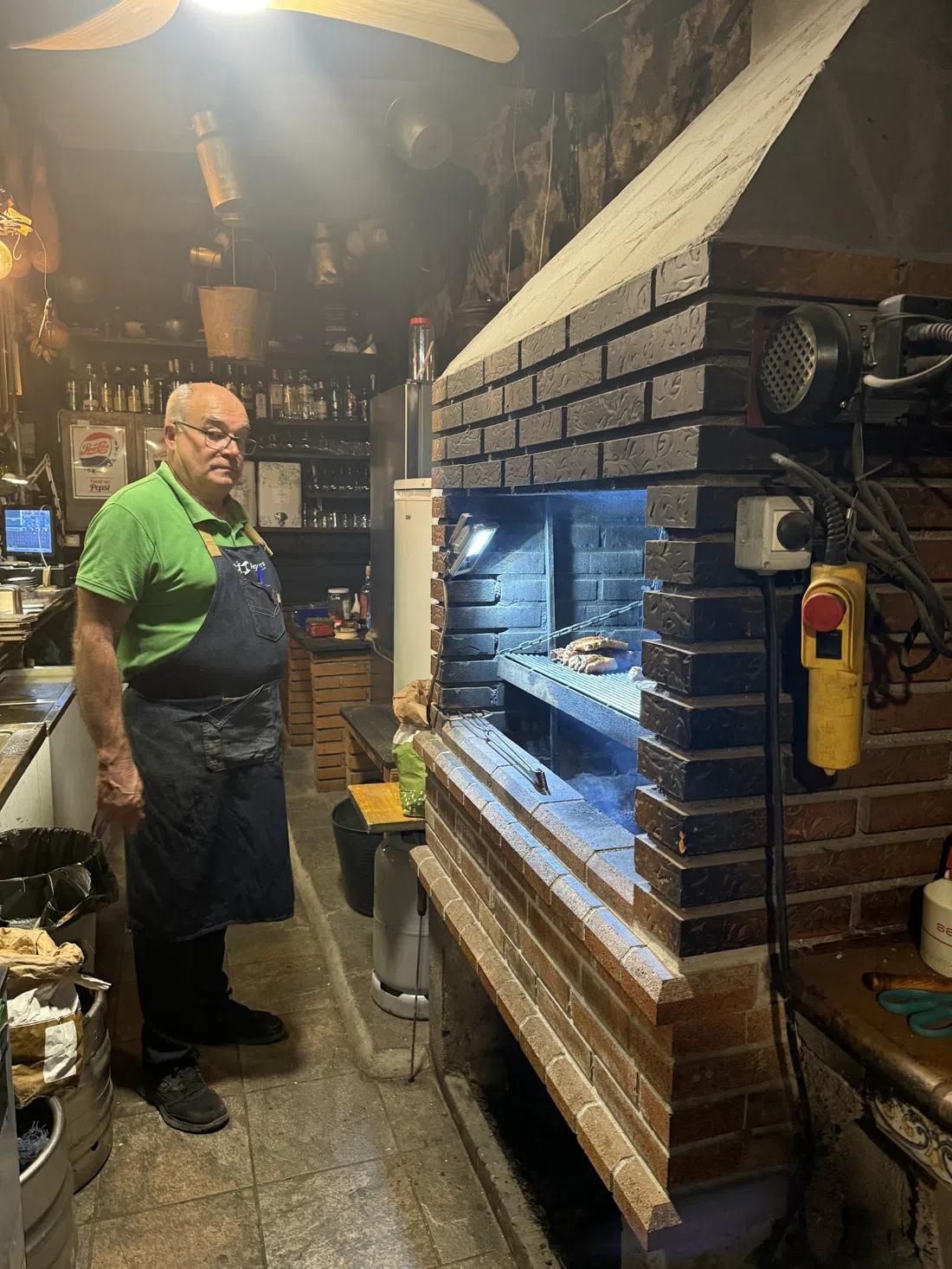
Mesón del Norte (Calle Barlovento 27, El Mocanal) is 2 km from the Pozo car park and the most reliable proper meal near the hamlet. Hams and local cheeses hang behind the bar, and the grilled meat and Herreño cheese arrive on plain wooden tables, big plates at fair prices. €€. Ask for the terrace; the indoor room gets hot. Book on +34 677 50 95 14.
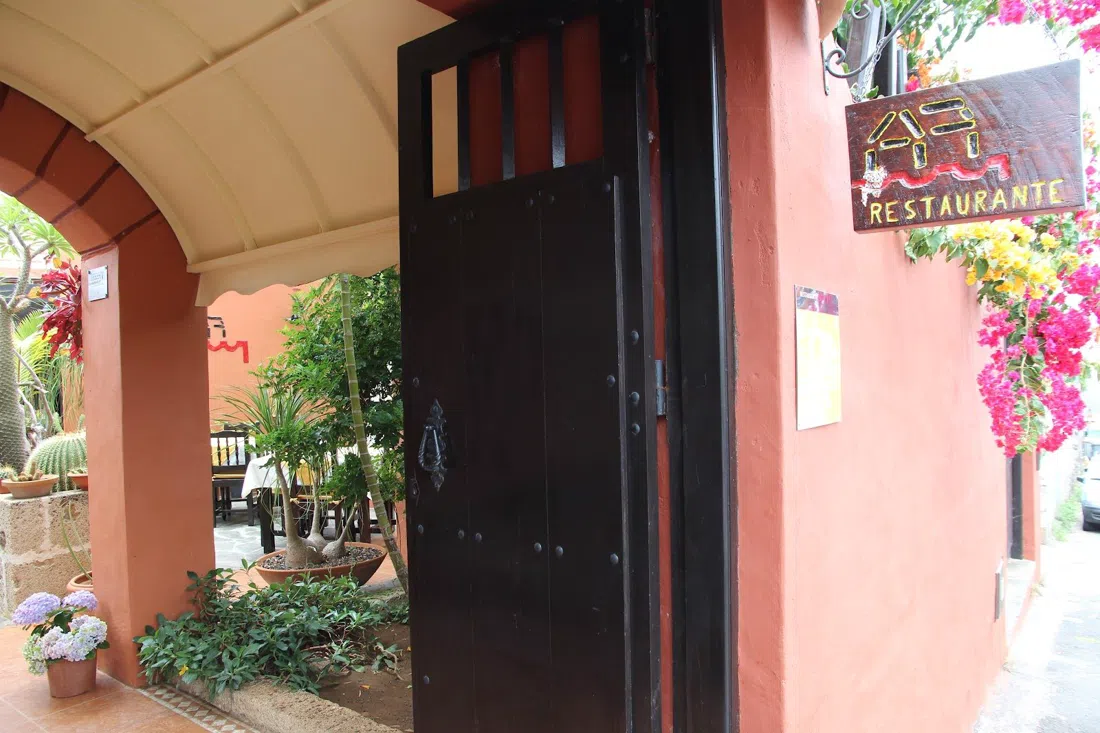
La Higuera de la Abuela in Echedo cooks traditional El Hierro food from local produce in a plant-filled courtyard shaded by a fig tree, stone walls around you and terrace tables outside. It is the nicest room on this coast. The merengón, made in the house and served tall, is what everyone orders. €€. Lunch runs 13:00 to 16:00, dinner only on Friday and Saturday, and the kitchen closes Tuesdays. The place is wheelchair accessible, parking is free on and off the street, and vegetarian, vegan and gluten-free orders are standard. Book on +34 922 55 10 26.
Guachinche Aguadara (Casas del Monte 8, El Mocanal) is 2.5 km from Pozo up a dirt track, a farmhouse room with long shared tables, house wine poured from the barrel, carne fiesta and local cheese. Country plates come cheap, € to €€. Closed Monday and Tuesday. It books out solid. Reserve by WhatsApp on +34 629 56 34 33, since the site has no phone signal.
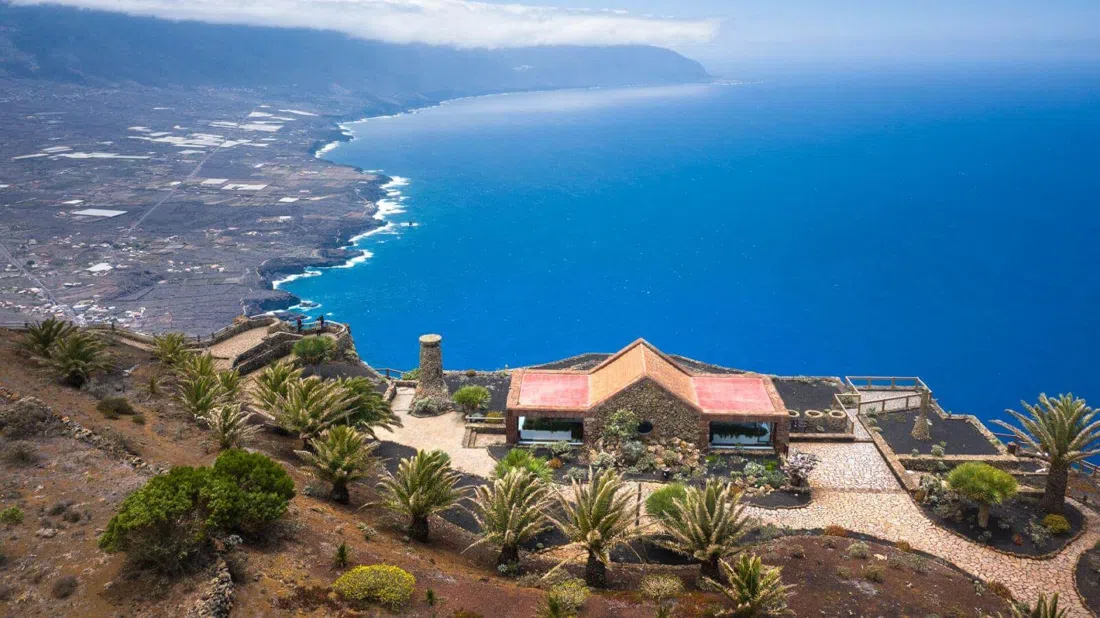
Mirador de la Peña and Valverde
Mirador de la Peña is at Guarazoca, 8 km west of Pozo, and it is El Hierro's one piece of famous architecture: César Manrique's low basalt-and-glass pavilion at 645 metres, opened in 1989, with a panoramic window wall, masonry vaults and an interior garden. It looks straight down on the El Golfo valley and the Roques de Salmor, and the view is the best on the island. The viewpoint is free and has parking. The restaurant inside is small. Book ahead for more than six. It serves a Canarian menu with fresh fish and local pineapple, €€ to €€€.
Iglesia de Santa María de la Concepción in Valverde, 8 km from Pozo in the island capital, is the biggest building on El Hierro and a listed Bien de Interés Cultural, built between 1767 and 1820 after the first tower collapsed. Whitewashed baroque over three naves, a squat two-storey bell tower above the central arch, an octagonal belfry with a clock, a small Mudéjar dome with a Virgin figure on top. Inside are a tea-pine Mudéjar coffered ceiling and an 18th-century Genoese Cristo de la Columna. Entry is free when the church is open for worship. Dress modestly and stay clear of services. Pair it with lunch in town.
Where to stay
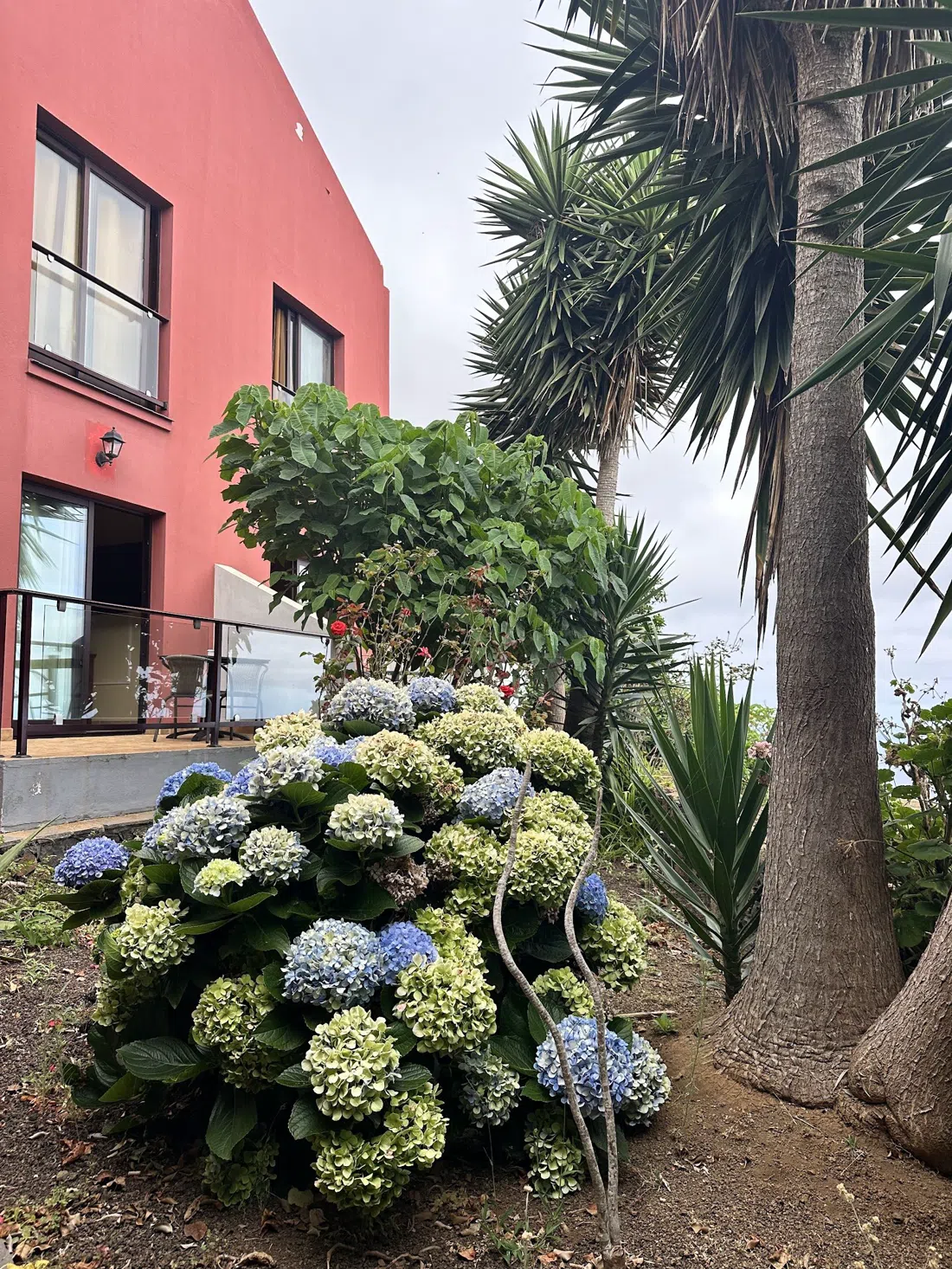
Hotel Villa El Mocanal is the nearest hotel to Pozo, 2 km away and 5 km from Valverde: a small rural place on the hillside, low and white, with terracotta tiles, balconies, easy on-site parking and terraced slopes dropping to the sea. Rooms start at €68 to €70 a night. The rooms are dated and the pool is not always filled. Take it for the position. A car fits on the drive and dinner is within walking distance. Confirm availability directly.
Before you go
La Higuera de la Abuela closes Tuesdays, Guachinche Aguadara closes Monday and Tuesday, and all four places to eat want a call or a message before you arrive. Check the sea state before you start down to the pools.
See the El Hierro guide and the El Hierro hotel search.