The crossing from Tenerife to La Gomera takes 50 minutes, and every sailing leaves from the same small quay at Los Cristianos. You walk off the ramp into the middle of San Sebastián de La Gomera, so a day trip works without a car.
Fred. Olsen or Baleària
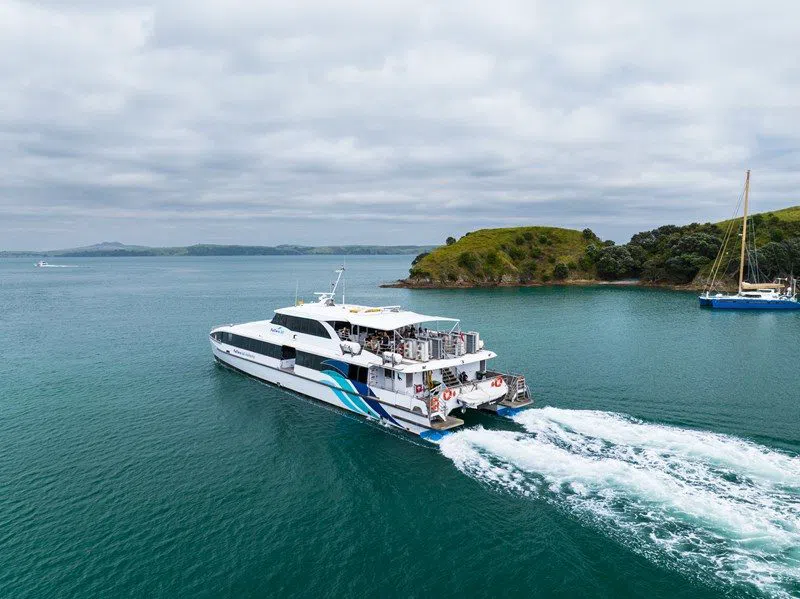
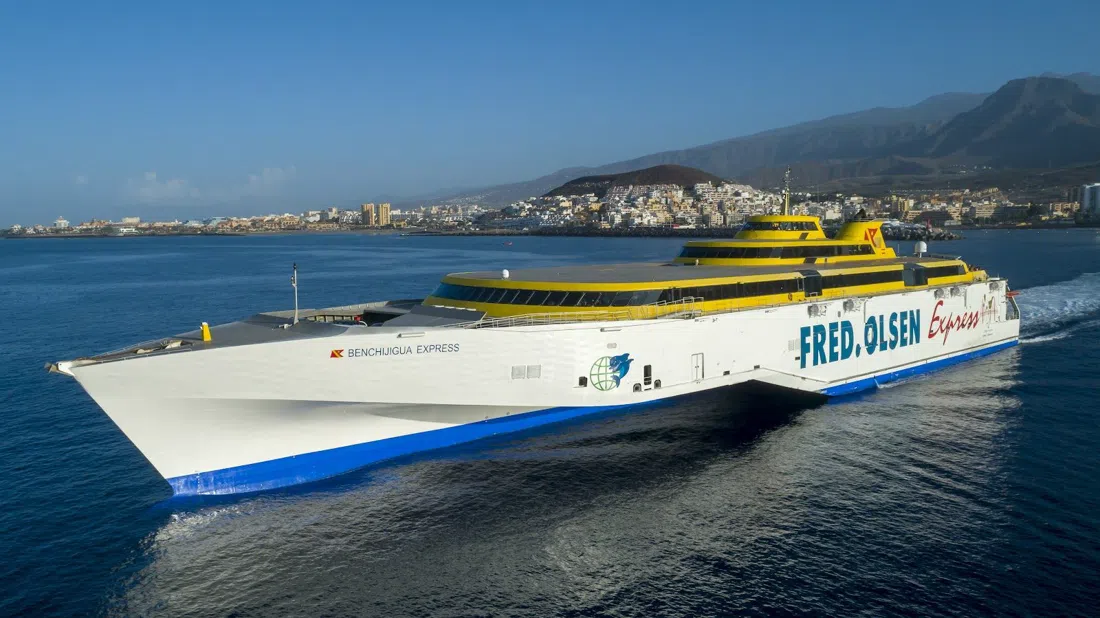
Fred. Olsen Express runs the faster and more frequent service, with up to five departures a day in each direction. A one-way adult ticket is €40 to €46 if you don't live in the Canaries. The low fares on the homepage are resident rates. You can add a car or a bicycle while booking. The boat is a trimaran with cafeterias, free Wi-Fi, an outdoor terrace and cabins for pets. If you need a boarding ramp or help getting aboard, arrange it when you book. It costs nothing, but it has to be booked ahead.
Baleària Canarias is the company many people still look for under another name. It took over Armas Trasmediterránea's Canary Island routes in May 2026, and the old Armas web address now redirects to it. Four round trips a day have run since 1 July. Monday to Saturday, the first boat off La Gomera goes at 06:30. The last one back from Los Cristianos leaves at 19:30. Sundays start and finish later, with a 21:30 sailing from Los Cristianos. Fares begin at €42 one way for a non-resident adult. If you searched for Naviera Armas and booked through a third-party site, check your times against the current Baleària Canarias timetable.
The quay at Los Cristianos
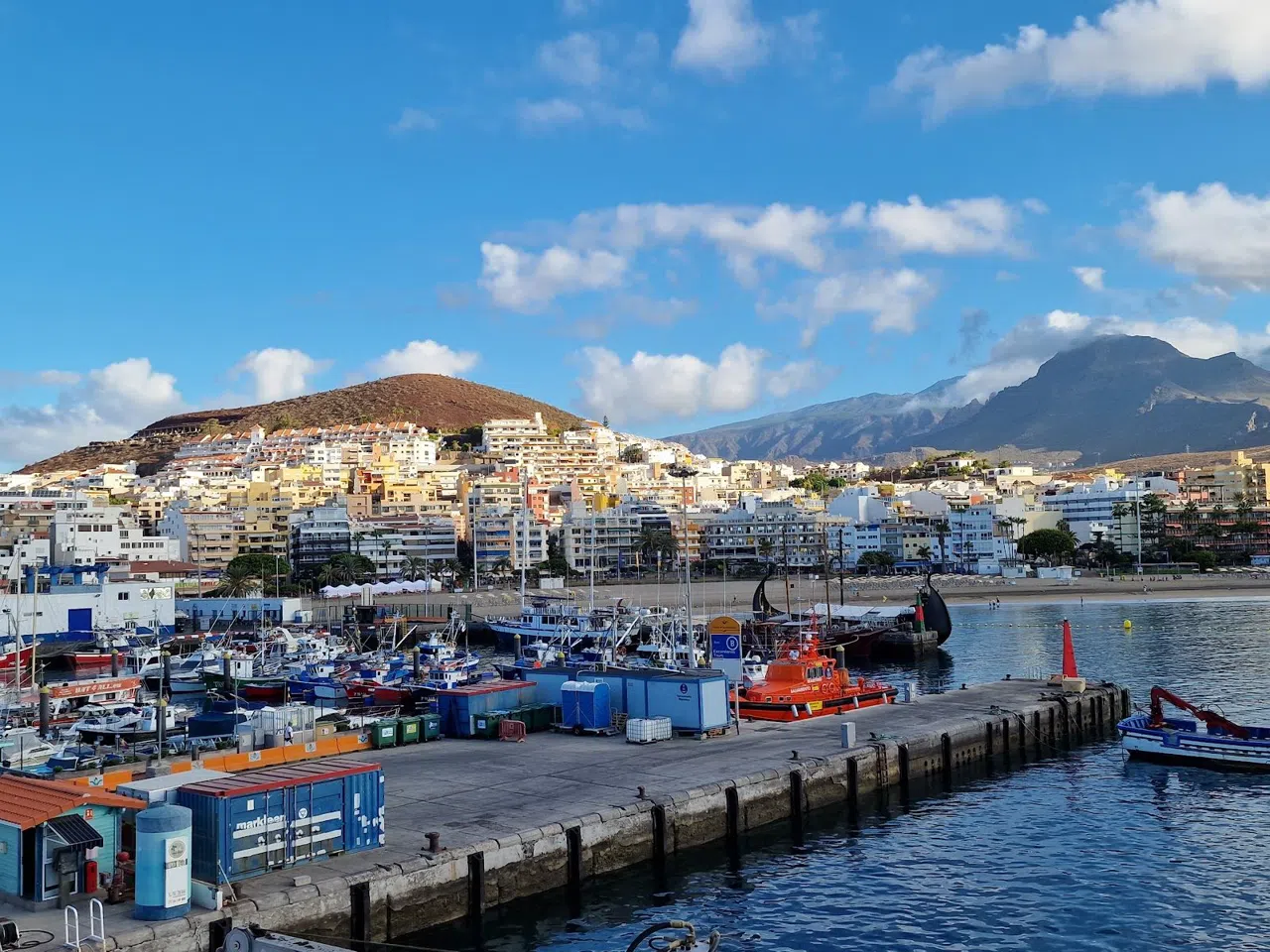
Puerto de Los Cristianos is on Tenerife's south coast, about 14 km from Tenerife South Airport, at the end of Calle El Espigón beside the town beach. It's a small working harbour with not much room to spare. On foot, be there 30 to 60 minutes before departure. With a car, give yourself a full hour. Take the cut-off time printed on your ticket seriously, because Baleària stops vehicle boarding 40 minutes before it sails. Parking is tight and the car lanes back up onto the street, so come by bus or taxi if you can. Your car sits on the garage deck for the crossing, so carry off anything you'll want for the 50 minutes.
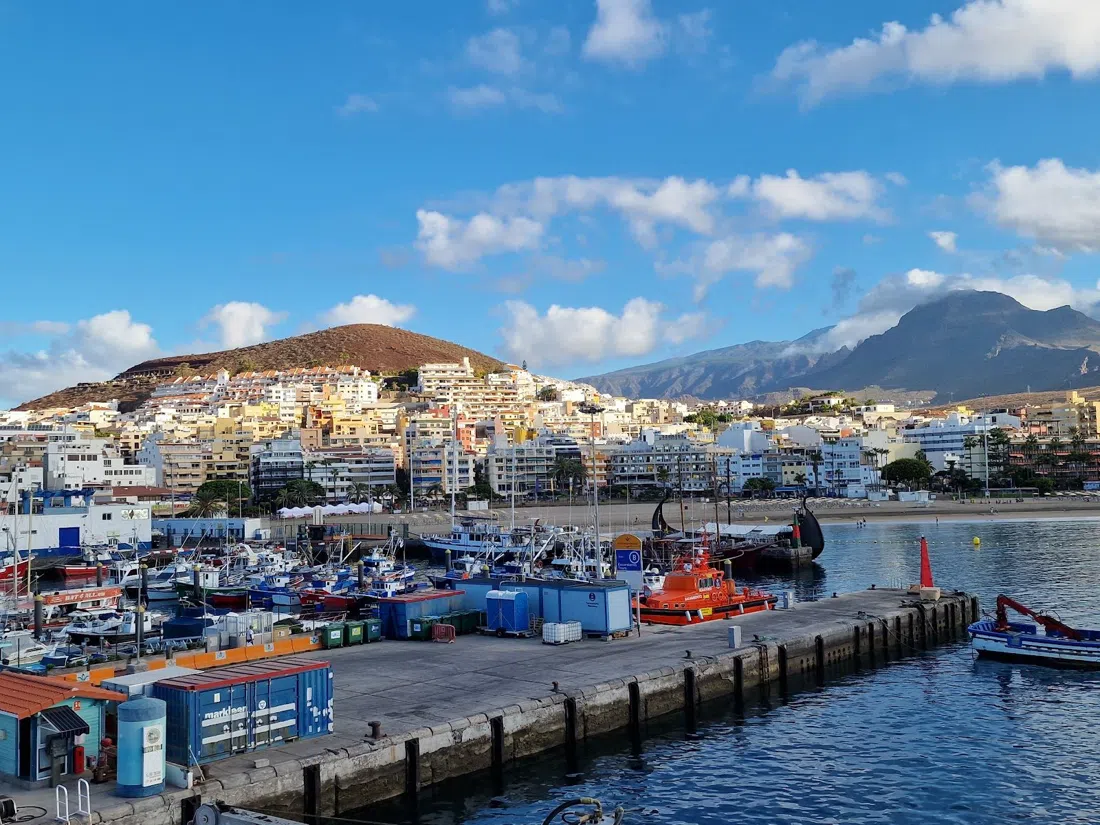
Off the ramp in San Sebastián
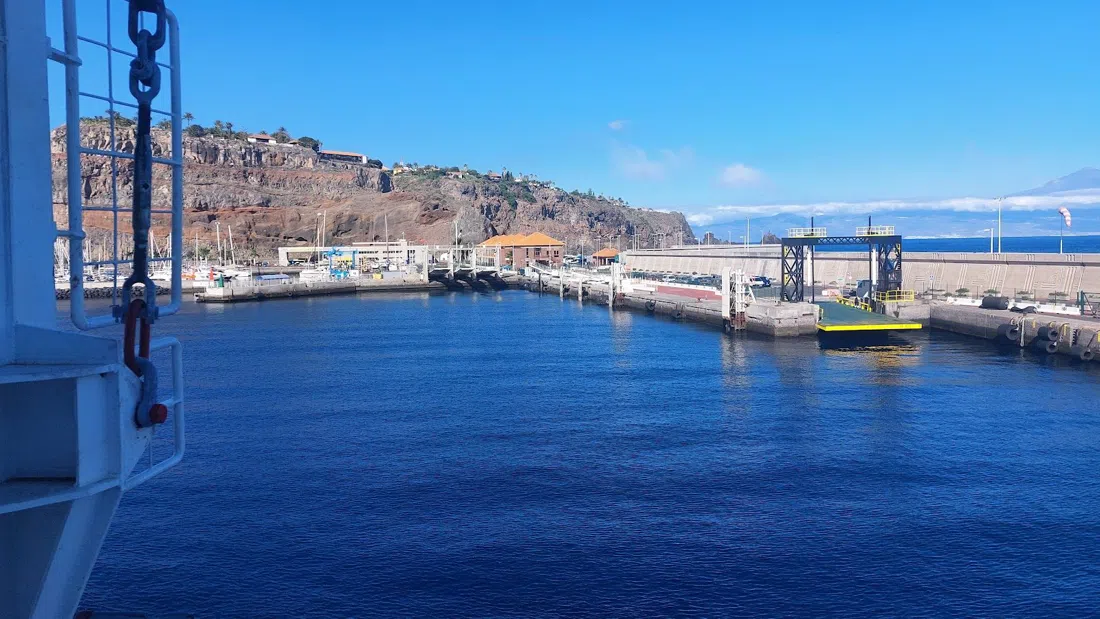
The Estación Marítima de San Sebastián de La Gomera stands on a curved harbour arm. The whitewashed town is straight ahead, with bare brown ridges rising behind the roofs. The centre is a few minutes' walk. Taxis wait for arriving sailings, and the bus stop is on the forecourt. I'd check the time of your onward bus before you step off the boat, not after.

With an hour or two between sailings, two places are worth the walk. The Museo Arqueológico de La Gomera on Calle Torres Padilla explains who was on the island before the Castilians, and it's the only place that does. Entry is €2.50, or €2.00 with ID, and it takes no cards, so bring cash. It opens on weekdays, 09:00 to 13:30 and 15:00 to 17:00. Guided visits are in Spanish only, by appointment, on weekday mornings. A couple of minutes away on the pedestrian Calle del Medio, Casa Colón is free and opens on weekdays from 08:00 to 15:00. Both close at weekends and on holidays. The Torre del Conde and the old customs house, La Aduana, are shut for now. Casa Bencomo on Calle Real is the island tourist office, and it has walking maps.


The coastal boat
Fred. Olsen also runs the service along La Gomera's own coast, which is the easy way to a second stop. Playa de Santiago is 30 minutes from the capital, Valle Gran Rey 40 minutes further on, 70 minutes end to end.
Playa de Santiago sits on the dry south coast below the Lomada de Tecina. The bay is grey sand, shingle and rock, with a small jetty at one end. Go for the sun, not for soft sand. Valle Gran Rey is the place to stay by the sea. It's a deep ravine of stepped palm terraces dropping to black-sand beaches. The harbour village of Vueltas is at one end, and the open stretch of La Playa at the other. La Playa suits confident swimmers. Charco del Conde, La Puntilla and Playa de La Calera are the other known swimming spots. It's about half an hour on foot between the villages in the valley, so you can manage there without a car. On a day return, getting down here and back will eat the day. This is somewhere to sleep for a few nights.

Buses from the terminal
All eight GuaguaGomera lines use the Estación Marítima San Sebastián stop at the ferry terminal, which is what makes the island workable as a foot passenger. Line 1 goes to Valle Gran Rey, line 2 to Vallehermoso by way of Agulo, line 3 to Alajeró and line 7 to the airport. Fares are set per route and shown on each line's stop list.

The service is thin. From the last quarter of 2026, the Valle Gran Rey and Vallehermoso lines get a 07:00 first departure from San Sebastián. The earliest bus used to leave at 10:30. The Alajeró line goes up to seven runs in each direction. Times can still change, so check before you go. Don't plan a bus day around a tight return sailing with no fallback, as a missed bus can cost you hours.
Agulo, Abrante and the forest
Agulo is 17 km from the capital on the winding GM-1, about 23 minutes by car, or the length of line 2 by bus. It's a tight grid of white and ochre houses on a shelf of banana terraces, ringed by near-vertical cliffs. In 2021 it became the first village on La Gomera certified as one of Los Pueblos Más Bonitos de España. Expect a quiet couple of hours.
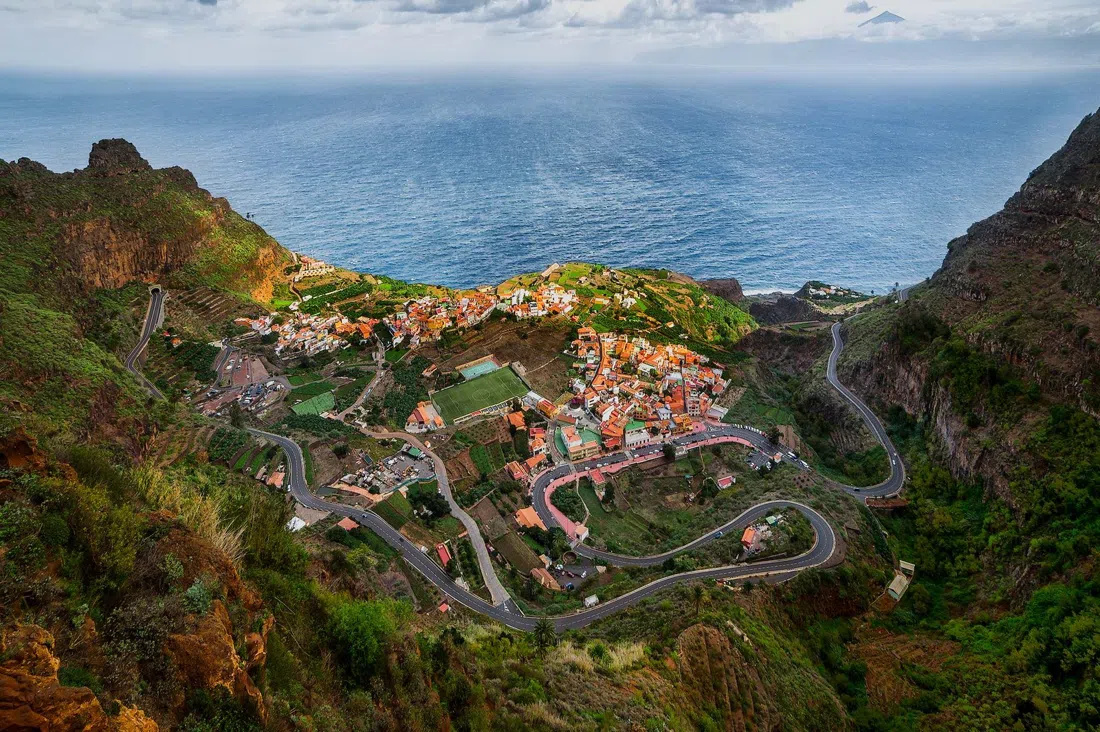
Directly above it, the Mirador de Abrante pushes a glass-floored platform out over the cliff edge. The village is roughly 400 metres below, and on a clear day you can see Teide across the channel. There's no ticket, there's a car park at the entrance, and access is possible for visitors with reduced mobility. It's away from the bus routes, so you need a vehicle.

The reason most people cross at all is the Parque Nacional de Garajonay, a laurel forest of moss-furred trunks under thick cloud. Entry is free. The Juego de Bolas visitor centre at La Palmita, on the edge of Agulo, opens every day from 09:30 to 16:30. It closes only on 25 December and 1 January, and its Casa de La Memoria annex is shut for building work. In the middle of the park, the La Laguna Grande centre on the GM-2 opens daily from 08:30 to 16:30. Both have parking, toilets and a cafeteria, which matters because there's little else up there. If all you have is the gap between two sailings and no car, leave the forest for another trip.

Driving down to Valle Gran Rey, stop at the Mirador de Palmarejo before the descent. César Manrique set the low stone-and-whitewash building into the rock about 700 metres above the ravine. From it you see the valley's full length down to the sea. There's a restaurant inside serving dishes made with palm syrup from its own gardens, though its opening has been patchy, so treat it as a bonus.

Staying the night
If the last boat feels early, stay. The Parador de La Gomera is a four-star in a grand Canarian mansion on the cliff above the harbour. It has subtropical gardens and a pool looking out towards Tenerife, and the Restaurante Conde Niebla does modern Canarian cooking. Rooms are €€€ and it fills in high season, so book well ahead. The walk up from the port takes about 12 minutes and it's steep, so allow for a taxi if you're carrying luggage. For other options, try the La Gomera hotel search.

Before you book
The capital's two small museums close at weekends and on holidays, and the archaeology museum takes cash only. Arrange accessible boarding with the operator when you buy your ticket. See the La Gomera guide for the rest of the island.